- ON-LINE-EVENT
Third On-line
Seminar
SESSION CHAIRS
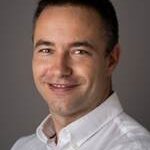
Gabor Jarvas
Research Institute of Biomolecular and Chemical Engineering University of Pannonia (Hungary)
Petr Chocholouš
Faculty of Pharmacy in Hradec Kralove at Charles University (Czechia)
Program Details
Duration 2 hours
Lecture 1
Bead Injection as a tool for online solid phase extraction
Petr Chocholouš, Faculty of Pharmacy in Hradec Kralove at Charles University (Czechia)
Lecture 2
Modern flow approaches for LPME automation
Burkhard Horstkotte, Faculty of Pharmacy in Hradec Kralove at Charles University (Czechia)
Speaker Biographies
Sequential Injection Analysis is a flexible and programmable platform for executing various analytical tasks in a flow. The key features are high precision, automation, miniaturization, operation speed, and long-term durability. These enable the development of methods for sample pretreatment, direct determination, or online hyphenation of multiple analytical instruments.
Online Solid Phase Extraction can be automated by Sequential Injection Analysis using either reusable commercial or lab-made cartridge columns or automatically disposable columns (Bead Injection). The extraction utilizes a broad choice of commercial or experimental sorbents (silica, polymer, polysaccharide, or diatomaceous earth) in a particulate, monolith, or nanofibrous morphology.
Sequential Injection Analysis significantly accelerates method development by continual online detection of the column outlet, which enables understanding of critical parameters during the sample loading, matrix elimination, and analyte elution, maximizing the method recovery and minimizing time and consumable demands.
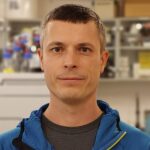
Petr Chocholouš
Faculty of Pharmacy in Hradec KrálovéDepartment of Analytical Chemistry
Charles University
Hradec Králové, Czech Republic
Petr Chocholouš obtained his Ph.D. in Pharmaceutical Analysis from Charles University, where he was a postgraduate student of Dalibor Šatínský and Petr Solich. He spent seven months at the University of Washington as a postdoctoral fellow of the father of Flow Analysis – Prof. Jarda Ruzicka. In 2019, he habilitated and is currently an Associate Professor at the Faculty of Pharmacy, Charles University. His research interests include various topics in Flow Analysis and related techniques. It all started in 2002 with the birth of Sequential Injection Chromatography (SIC), utilizing various monolithic or particle-packed columns for multi-component analysis. For more than 20 years, he has been gradually bringing the capabilities of SIC closer to HPLC. He also focuses on online SPE for sample pretreatment before chromatography and characterization of novel SPE sorbents in conventional cartridge-packed columns and automatically disposable Bead Injection formats. Recently, he has been dealing more and more with Programmable Flow Injection, the topic of an online tutorial coauthored with Jarda Ruzicka and Graham D. Marshal. The methods typically focus on pharmaceutical analysis, bioanalysis, and oceanography.
Sample preparation is a key step in the analytical process that decides on sensitivity, reliability, and selectivity of the analytical method. Above all, sample compatibility with the instrumental technique aimed for analyte quantification must be achieved. Sample preparation can also be a major source of error to the result, e.g., by contaminating the sample during treatment. Procedural automation and coupling sample preparation directly to the intended detection instrument can reduce these risks and generally comes with a gain in cost and time efficiency, as well as reproducibility and reliability of analysis. Most often today, versatile autosampler systems are used for this purpose, while flow techniques can show interesting advantages or add positive features to such processing instrumentation. Thus, getting familiar with the concepts and potential of handling samples in flow for analyte preconcentration and matrix clean-up can be more than just useful background knowledge for the analytical chemist.
In this seminar, the possibilities of the automation of liquid phase (micro)extraction (LPE/LPME) procedures using modern flow approaches/techniques should be presented for which a short overview of the different LP(M)E approaches should be given, including specific challenges and a comparison to solid phase extraction as alternative sample preparation. Furthermore, the potential, characteristics, and differences in operation and performance of flow approaches should be given focusing to Sequential Injection Analysis and the Flow Batch technique Lab-In-Syringe, a technical approach that overlaps with autosampler automation.
To this end, examples will be shown on implementation modes, system setup, and possibilities of operation. Moreover, an overview of challenges in coupling automated sample preparation to modern instrumental analysis should be given.
Recommended literature on the main automation technique discussed:
B. Horstkotte, P. Solich, The Automation Technique Lab-In-Syringe: A Practical Guide, Molecules 25 (2020) 1612. – OPEN SOURCE, https://doi.org/10.3390/molecules25071612

Burkhard Horstkotte
Faculty of Pharmacy in Hradec KrálovéDepartment of Analytical Chemistry
Charles University
Hradec Králové, Czech Republic
Associated Professor of Analytical Chemistry at the Faculty of Pharmacy in Hradec Králové, Charles University. Diplom Ingenieur Umwelttechnik (2000) at the Hamburg University of Applied Sciences (HAW), Germany. Research fellow at the Federal Research Center for Fisheries, Hamburg. Master of Science in Environmental Engineering (HAW, 2005). Doctorate at the University of the Balearic Islands, Spain (2008)., Postdoc contract at the Mediterranean Institute for Advanced Studies (IMEDEA – CSIC), Department for Global Change Research, Spain and current institution (since 2012). Teaching in Analytical Chemistry, Instrumental Analysis, and Special Methods of Instrumental Analysis. Participation in 18 research grants and projects, 15 research stays, 4 research cruises, supervisor of 15 master and bachelor students, 4 doctorate students, and 7 visitors. 35 oral lectures on international conferences (7 invited) and lecturing in 3 workshops.
Main research focus on the development of sample preparation methodologies, in particular investigating their automation using flow techniques and coupling to advanced instrumental techniques (GC, CE, HPLC, ICP), further development of the automation technique Lab-In-Syringe, applications to environmental, food, and biological matrices. 68 peer-reviewed publications listed in Web-of-Science, > 1400 citations (without self-citations), h-index of 26.
- UPCOMING EVENT